Introduction: The Playlist Dream and the Fan Reality
You’ve been told a story about how to “make it” in music. It starts with your new single landing on a massive Spotify playlist. The streams pour in, the numbers explode, and overnight, you have thousands of new listeners. It’s the validation you’ve worked for.
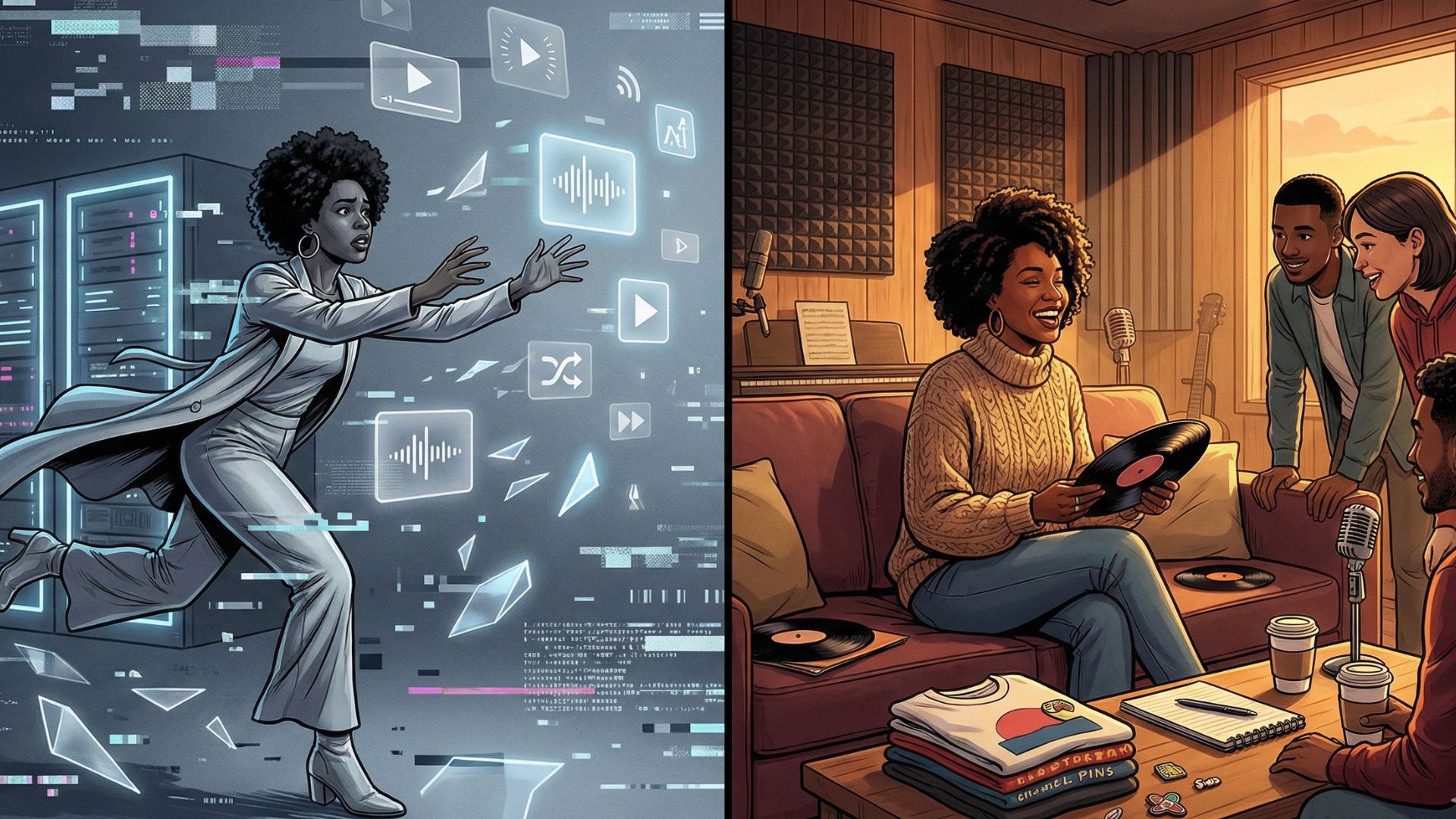
But let’s be direct: Does that temporary reach build a long-term future? When your entire business depends on algorithms you don’t control and platforms that see your music as mere content, you’re not building a career; you’re renting an audience on someone else’s property.
This article will break down the critical difference between playlisting (chasing streams) and fanbuilding (building an actual business). We’ll explore why, for an artist in the early stages, one is a short-term tactic and the other is the essential foundation for a career that lasts.
1. The Allure of the Playlist: What It Is and What It Isn’t
Playlisting is a powerful tool for discovery. A placement on the right playlist puts your music in front of new ears, leading to a significant—but often temporary—increase in your stream count. It’s a source of visibility in a crowded market, and it can feel like a major win.
However, relying solely on playlists for growth comes with serious limitations. It provides visibility, but it doesn’t build loyalty.
- Streams Don’t Equal Fans: A listener who discovers your song on a playlist like “Sad Indie” or “Lo-Fi Beats” is a fan of that playlist’s vibe, not necessarily a fan of you as an artist. They often don’t know your name, your story, or your other music. They are a passive listener, not an active supporter.
- You Don’t Own the Connection: Digital Service Providers (DSPs) like Spotify and Apple Music act as intermediaries. They prevent you from collecting valuable fan data like emails or phone numbers, which are the building blocks of a direct relationship. You are “renting” an audience on their platform, not owning the connection yourself. This is a critical gap that we’ll show you how to close with your own digital home base in Section 4.
- It’s an Unreliable System: Your career becomes subject to forces outside of your control. Major editorial playlists are often dominated by major label artists, creating a gatekeeping effect. Furthermore, algorithms can change overnight, leaving your primary source of discovery at the mercy of a system you can’t influence.
2. Fanbuilding: Your Career’s Most Valuable Asset
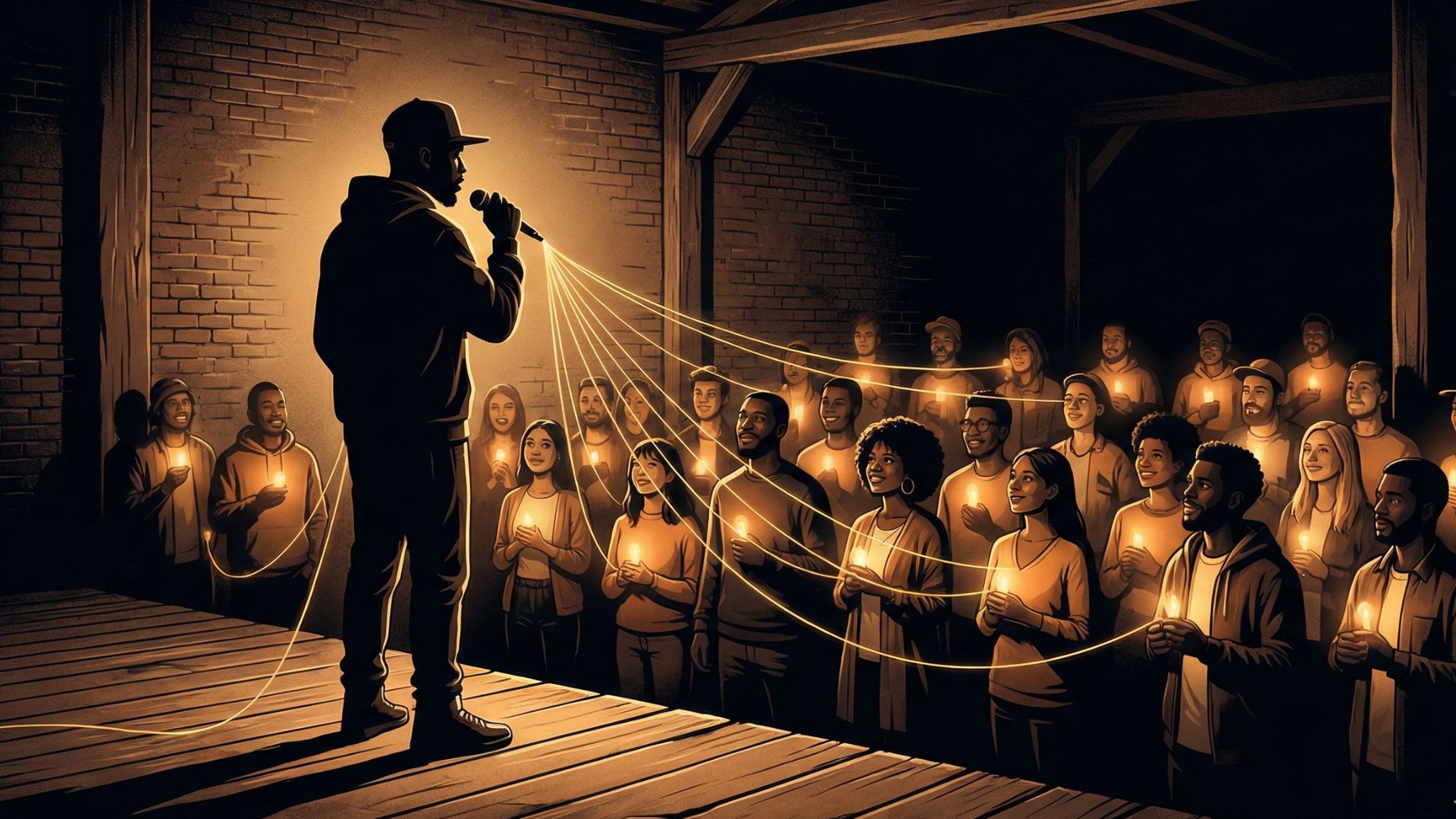
Fanbuilding is the intentional process of creating direct, authentic relationships with your audience. It’s the difference between someone passively hearing your song and someone actively choosing to follow your journey. It’s about building a community, not just chasing numbers.
For an artist with under 10,000 streams, the goal isn’t to reach millions of anonymous listeners. It’s to find your “core 100” or “core 1,000” true fans—dedicated supporters who will become the foundation of your entire music business.
A direct relationship with your fans is a stable, long-term asset that you own and control. Here’s why it’s so powerful:
- It’s Algorithm-Proof: Owning your email list means you’re no longer just a tenant on Instagram’s property, subject to their changing rules. When you have a fan’s email address or phone number, your ability to communicate with them is not affected by changes to a social media or DSP algorithm. You have a direct line to your most dedicated supporters.
- It Provides Invaluable Data: Owning your fan data is one of the most valuable assets an artist can have. It allows you to understand who your audience is, where they live, and what they value. This data isn’t just for planning tours; it can reveal which brands your fans love, opening doors for strategic partnerships and smarter marketing decisions.
- It Fosters True Loyalty: Direct engagement is what turns casual listeners into dedicated superfans. Sharing your story, your creative process, and your vision allows people to connect with the person behind the music. That authentic connection is what inspires them to buy your merch, come to your shows, and champion your career for years to come.
3. The Hard Truth: Why Streams Don’t Pay the Bills (But Fans Do)
Let’s be direct about the economics of streaming. Revenue from platforms like Spotify is notoriously slow to pay out and often amounts to fractions of a cent per stream—sometimes as low as $0.003. At this rate, building a sustainable income from streams alone is nearly impossible for an artist in the early stages of their career.
In contrast, a direct fan base opens up multiple, far more profitable revenue streams. When you’ve built a real connection, fans want to support you in more meaningful ways.
- Merchandise and Physical Products: True fans buy t-shirts, hoodies, and vinyl not just for the product, but to support the artist they believe in. It’s a tangible way for them to invest in your journey.
- Exclusive Content & Digital Products: You can offer behind-the-scenes videos, unreleased demos, or limited-edition digital art directly to your core supporters, creating high-value products that go beyond a simple stream.
- Fan Clubs & Subscriptions: Platforms like Patreon allow you to create a subscription-based community where your most dedicated fans get exclusive access in exchange for recurring monthly support.
- Direct Music Sales: By selling high-quality downloads, special edition CDs, or signed vinyl directly from your own website or a platform like Bandcamp, you keep a much larger percentage of the revenue.
Across the creative industries, data shows that a small number of dedicated superfans often drive the majority of an artist’s revenue. Nurturing a small, loyal audience is far more profitable than chasing millions of passive, low-paying streams.
4. A Practical Playbook: Your First Steps in Fanbuilding
Building a fan base from zero can feel daunting, but it starts with a clear, actionable plan. Here is a step-by-step guide to laying your foundation.
Step 1: Find Your Truth—Your Story is Your Brand.
Before you ask anyone to follow you, you need to be clear on who you are and what you stand for. Your brand isn’t just a logo; it’s your authentic message and the emotional experience you promise to deliver. People connect with the story behind the music, and life has taught a crucial lesson: “there ain’t no future in your fronting.” People sense when something isn’t real, and maintaining a fake persona is exhausting. Your brand works best and lasts longest when it’s simply an extension of your truth.
Step 2: Build Your Digital Home Base.
You need a central, owned platform where you can direct all traffic. This doesn’t have to be a complex website at first. A simple, clean landing page—using a tool like Single.xyz or similar to create a smart link page that doubles as your central hub—is enough to start. The most critical element is a clear way to collect contact information, like an email address or phone number. This is where you will turn “rented” social media followers into an “owned” audience.
Step 3: Start Your Fan-Building Engine: The Create, Capture, Convert Method.
This simple three-part framework is the engine of your fan-building system.
- Create Attention: Use social media platforms like TikTok and Instagram to tell your story and share your creative process. Post clips from the studio, talk about the meaning behind your lyrics, or share a day in your life. The goal is to build a human connection, not just to post “stream my new song” links.
- Capture Attention: This is how you solve the “renting” problem we discussed earlier. You are moving your followers from a platform you don’t control to an asset you own. Create a compelling offer—like an unreleased song, an exclusive demo, or a discount code—to incentivize followers to join your email or text list. A powerful tactic is the Direct-to-Fan Funnel: using a pre-save campaign that leads to an email opt-in, which then triggers an exclusive offer. This is the crucial step where a follower becomes a direct contact.
- Convert Attention: Now that you have a direct line to them, nurture that relationship. Send out regular, valuable communications that aren’t always about selling. Share updates, ask for their opinions, and make them feel like a part of your inner circle. Over time, this consistent engagement will convert your most dedicated fans into paying customers and long-term supporters of your career.
Conclusion: Play the Long Game by Building a Real Business
Stop renting your audience and start building your home. Playlisting is a tool for short-term visibility, but fanbuilding is the long-term strategy for a sustainable career in music. One gives you a fleeting moment of attention; the other gives you a foundation for a legacy.
To succeed as an independent artist today, you must adopt the mindset of a creative entrepreneur. “That same creativity you use to write your songs…can be used to design systems, automate your workflows, and scale your vision.” You are not just making music; you are building a business.
Forget the obsession with viral moments and massive stream counts for now. Focus on the slow, rewarding work of building one true fan at a time. That is the single most powerful investment you can make in your future. Yes, the business can be cutthroat, unforgiving, and even thankless at times. But for those who can navigate the challenges while keeping their moral compass intact, the rewards are unspeakably priceless. It’s how you build a real business, a loyal community, and a career that lasts.